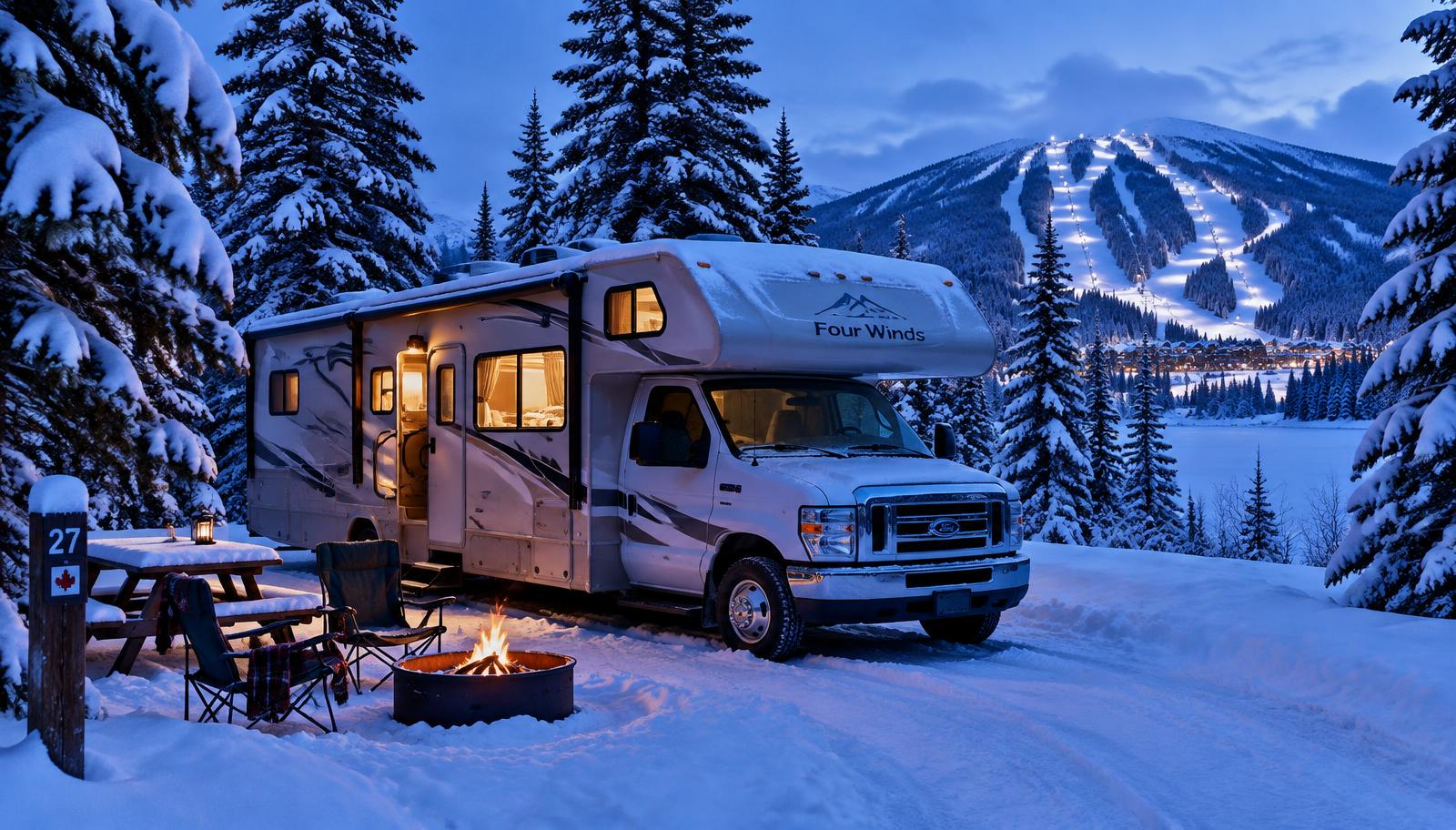
Canadian winters are no joke. −20°C is normal on the prairies, −40°C happens in Yukon and northern Alberta. Winter RV trips are amazing — just plan for them properly.
What is winterisation?
Water expands when it freezes and splits pipes. So in late autumn, most rental companies winterise RVs: they drain the fresh, grey and black tanks, blow out the water lines and fill them with pink non-toxic antifreeze.
What that means for you:
- No running water on board — no shower, sink or flushing toilet (some allow a "winter toilet" with bottled water).
- You use campground facilities, ski-resort lodges or jugs of water.
- Some companies offer "four-season" or heated-tank RVs with water — ask, and expect to pay more.
- Many depots don't rent big RVs at all from roughly November to March. Vancouver and Calgary have the most winter options.
Heaters: how they work
| Heater | Runs on | Notes |
|---|---|---|
| Propane furnace | Propane + 12V fan | The main heater. Powerful but drinks propane and drains the battery. A tank may last only 2–4 days in deep cold. |
| Electric heater / heat pump | Shore power | Cheap and quiet on hook-up. Heat pumps stop working well below about −5°C. |
| Diesel heater | Diesel tank | Common in European-style vans. Efficient, but needs winter diesel. |
| Engine heat | Engine running | Only while driving. |
⚠ Heads up
Never use the stove or oven to heat the RV. Keep a window cracked and check the CO detector works. Make sure the furnace exhaust isn't blocked by snow.
Stopping fuel freezing
- Diesel gels in extreme cold. Canadian stations sell winter-blend diesel in cold months — fill up locally, don't arrive with a tank of summer fuel. Anti-gel additives are cheap insurance.
- Keep the tank at least half full. Less air = less condensation = less ice in fuel lines. Plus you need fuel if you get stuck.
- Plug in the block heater overnight below −15°C (most Canadian vehicles have one — look for a plug poking out of the grille). Many campgrounds and motels have outlets.
- Propane also struggles below about −40°C. It's rare, but in Yukon it happens.
Snow chains: where, when and how
In British Columbia, winter tyres or chains are legally required on most highways from 1 October to 31 March (to 30 April on some mountain passes) — look for the signs. Commercial-size vehicles must carry chains on routes like the Coquihalla, Rogers Pass and Hwy 3. Alberta's national parks also require winter tyres or chains in winter. Quebec requires winter tyres on all vehicles from 1 December to 15 March.
Rentals in winter should come with winter-rated tyres (look for the mountain/snowflake symbol). Check whether chains are supplied — and whether you're even allowed to use them.
Fitting chains
- Practise at the depot. Seriously. Not at −15°C on a dark pass.
- Pull well off the road at a chain-up area (signed on BC highways).
- Lay the chain flat, drape it over the drive tyres (usually rear on a Class C), hook the inside then outside fasteners.
- Drive forward a few metres, re-tighten.
- Keep under 50 km/h. Remove at the chain-off area once roads are clear.
Why skiers love RVs
- Ski-hill hotels at Whistler or Banff can cost C$400+ a night. A winter RV is often less than half that.
- Many resorts allow overnight RV parking in designated lots — Sunshine Village, Lake Louise, Revelstoke, Big White, Sun Peaks and Marmot Basin have offered it (check current rules and fees).
- Wake up, boots on, first chair. Lunch and hot chocolate in your own kitchen.
- Hop between resorts on a Powder Highway road trip.
🍁 Top tip
Check DriveBC and 511 Alberta before every winter drive. Passes close at short notice for avalanche control.